

Faye Davies to address the International Conference on Adaptive Reuse in Pisa
Faye Davies, BFF’s Managing Director, will be presenting proposals for the restoration of the Grade II* Winter Gardens in Great Yarmouth at the forthcoming “International Conference on Adaptive Reuse”.
What stories do abandoned buildings still hold? Can they be transformed to serve new purposes without losing their essence? How can architects balance history and innovation? The conference will delve into the art and challenge of adaptive reuse, where past and present converge. Hosted by the University of Pisa, Italy, and supported by UNESCO Italia, the conference will be held at the “Gipsoteca di Arte Antica”, housed within the reused Romanesque Church of San Paolo all’Orto in Pisa.

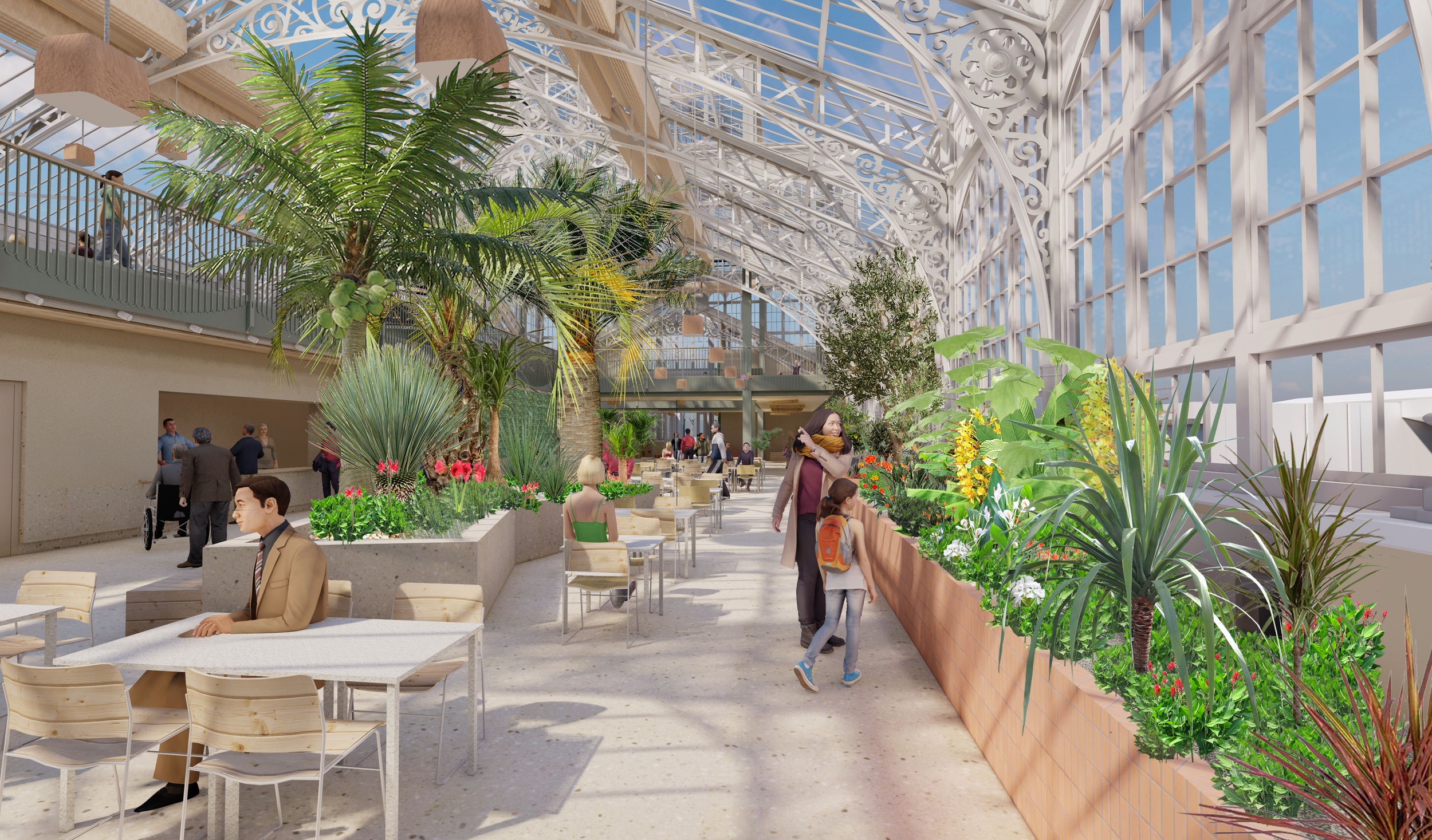
The last survivor of a British seaside tradition, following restoration, Great Yarmouth Winter Gardens will once again become a colourful and animated People’s Palace at the heart of the town’s life, economy, and heritage. The project will return the magnificent cast-iron structure, situated on the seaside promenade, to a year-round attraction; a flexible entertainment, activity & events, education and community space, with food and beverage.
The restoration has been made possible thanks to funding from Great Yarmouth Borough Council, The Town Deal Fund and The National Lottery Heritage Fund and National Lottery players. It is one of five successful NLHF Heritage Horizon Awards projects, aimed at ambitious, innovative and transformational schemes that will revolutionise UK heritage.
Biodiversity will be enhanced through a planting scheme that integrates endemic species and Victorian-era planting with local and drought-tolerant plants as well as native species from countries around the world linked to Great Yarmouth’s former trading routes.
“The concept of “reuse” is deeply connected to life and habitation in spatial contexts. Martin Heidegger’s Building, Dwelling, Thinking emphasized that a building’s true purpose and meaning come alive through human presence and experience. Around the world, abandoned structures tell the stories of past civilizations, urging us to preserve them while adapting them for new, contemporary purposes.
In recent decades, the adaptive reuse of architecture has become central to cultural and civic debates, driven by economic challenges, environmental crises, and reduced construction activity in the West. The decline of industrial complexes and religious sites, along with the inheritance of historic structures—fortifications, clustered buildings, and archaeological sites—demands innovative integration into modern life, either through reuse or transformation into cultural spaces. Adaptive reuse offers a sustainable solution by conserving land, protecting heritage, and minimizing waste.
At the heart of this strategy lies architectural design. Architects and engineers are tasked with reinterpreting and modifying existing structures, breathing new life into them while respecting their historical significance. This approach entails challenges such as merging architectural languages, balancing styles, and fostering a critical dialogue between past and present. This conference invites scholars and practitioners to explore the adaptive reuse design process, focusing on how contemporary design interacts with historical contexts. Contributors will examine operations such as building within, expanding, or filling voids—creative acts that preserve historical layers while addressing current needs. The conference adopts a multidisciplinary perspective, integrating design, history, restoration, technology, and other relevant fields to inform critical intervention strategies.”
Faye Davies is a Specialist Conservation Architect on the RIBA Register of Conservation Architects with a Post Graduate Diploma in Building Conservation from the Architectural Association. She brings over 20 years of expertise in the restoration and adaptive reuse of historic buildings. Her passion lies in ensuring these structures not only secure their future for the next generation but also have a meaningful, positive impact on the communities they serve. Faye is leading the design team for the restoration of the Winter Gardens.