

Burrell Foley Fischer named finalists for Public Building Architect of the Year
We are thrilled to announce that Burrell Foley Fischer have been named finalists for Public Building Architect of the Year at the 2026 BDOnline Architect of the Year Awards. The prestigious awards recognise architectural firms for a body of work in a particular sector.
For over four decades, Burrell Foley Fischer has delivered award-winning public buildings that combine architectural ambition with civic value. The projects submitted for the awards demonstrate how a new generation of Principals is successfully advancing this legacy, reimagining some of the country’s most prominent civic buildings and town-centre sites to secure renewed public purpose alongside sustainable and economically viable futures.
Collectively, the projects illustrate the breadth of the practice’s expertise across diverse typologies, scales and contexts. They range from the extension and enhancement of a successful theatre complex in the Malvern Hills, to the conservation and transformation of a historic carpet factory in Worcestershire, where a once-derelict gateway site has been revived as a vibrant centre for enterprise, creativity and community activity. They also include a new-build theatre in Andover, conceived as a landmark cultural destination central to the town centre’s long-term regeneration vision, and the restoration of Islington’s Union Chapel Sunday School Hall, a significant heritage project that has revitalised a rare Victorian educational building for contemporary community uses.
Across all projects, BFF works collaboratively with clients, stakeholders and communities to create schemes that enhance public access and engagement while carefully respecting and celebrating historic fabric, architectural context and the strong local attachment to these buildings and their settings. This approach is balanced throughout the design process with the delivery of high-quality, adaptable facilities capable of supporting new and evolving uses in ways that are environmentally responsible, operationally sustainable and financially deliverable within viable funding and capital constraints.
BFF submitted the following four Public Building projects as examples of our work, either recently completed or currently in progress.
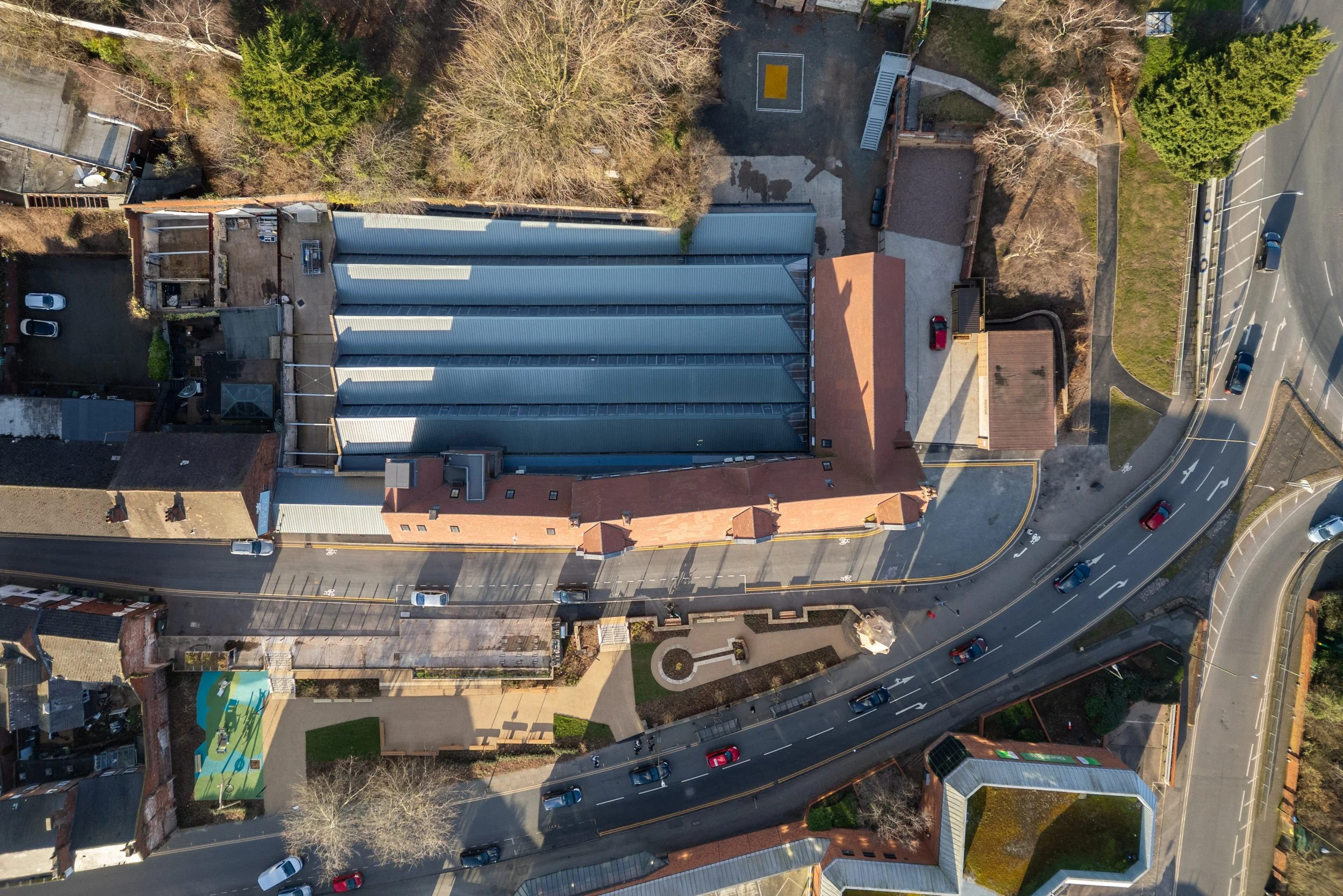
OLD COURT AND WEAVING SHEDS, KIDDERMINSTER
Bringing together architectural heritage and contemporary innovation to foster economic growth and community cohesion
The transformation of Kidderminster’s Grade II listed Former Magistrates’ Court has revitalised a prominent gateway site, re-establishing it as a dynamic centre for enterprise, creativity and community use. Delivered by Wyre Forest District Council with support from the Future High Streets Fund, the project restored a valued historic asset while adapting it to meet contemporary needs. Reimagined as “The Old Court and Weaving Sheds”, the scheme successfully integrates heritage conservation with flexible, future-focused design, reinforcing the identity and resilience of the town centre.
A comprehensive programme of works included conservation, strategic alterations, enhanced public realm and improved connections to surrounding urban routes, ensuring the site is reintegrated into the wider town. The approach prioritised the careful repair and retention of historic fabric alongside targeted interventions that enable new uses. The north-lit former weaving sheds, an important industrial typology that reflects the town’s historic association with the carpet industry, were carefully restored.
Adaptability is central to the design. Spaces are configured to support multiple uses and evolving occupier demands, underpinned by upgraded building services, energy-efficient systems and improved thermal performance. These measures reduce operational costs and environmental impact, supporting long-term sustainability. Landscape enhancements, including new planting, contributes to biodiversity and creates an inviting civic setting.
Previously vacant for over a decade, the building now accommodates a diverse mix of businesses, start-ups and community organisations. The Weaving Sheds provide a venue for workshops, performances and events. The project reconnects the town with its industrial heritage while fostering collaboration, innovation and inclusive growth.

THE LIGHTS, ANDOVER
A new landmark cultural destination at the heart of the town centre’s long-term regeneration vision
Commissioned by Test Valley Borough Council and supported through UK Government Levelling Up Fund, this new theatre and performance venue will form a landmark cultural destination at the heart of Andover. Arranged over three floors, the building will provide a diverse range of flexible, high-quality spaces designed to support performance, participation, and community use.
At its core, a 420-seat main auditorium is shaped by curved side slips to foster an intimate relationship between audience and performer. A secondary, adaptable event space accommodates between 120 seated and 350 standing. Retractable seating and a demountable stage enable a broad programme, from live music and comedy to banqueting. First-floor dance studios, complete with sprung floors, provide professional facilities for local creative organisations, while the upper level offers meeting rooms available for public hire. Two café-bars activate either end of the building, each extending to external terraces encouraging year-round social use.
The architectural expression draws on the heritage and landscape of Andover. Referencing key civic precedents and the rhythms of theatrical production, the façade is articulated through a sequence of carefully proportioned curved arches. A material palette of light-toned stone, evoking the locality’s chalk streams, complemented by pale brick, natural flint, and bronze detailing, reinforces a strong sense of place.
Dual entrances enhance permeability and connectivity: one from the High Street leading to a newly created Theatre Square, and another addressing Town Mills Riverside Park. The design has been shaped through extensive stakeholder consultation, ensuring the venue responds directly to community aspirations.
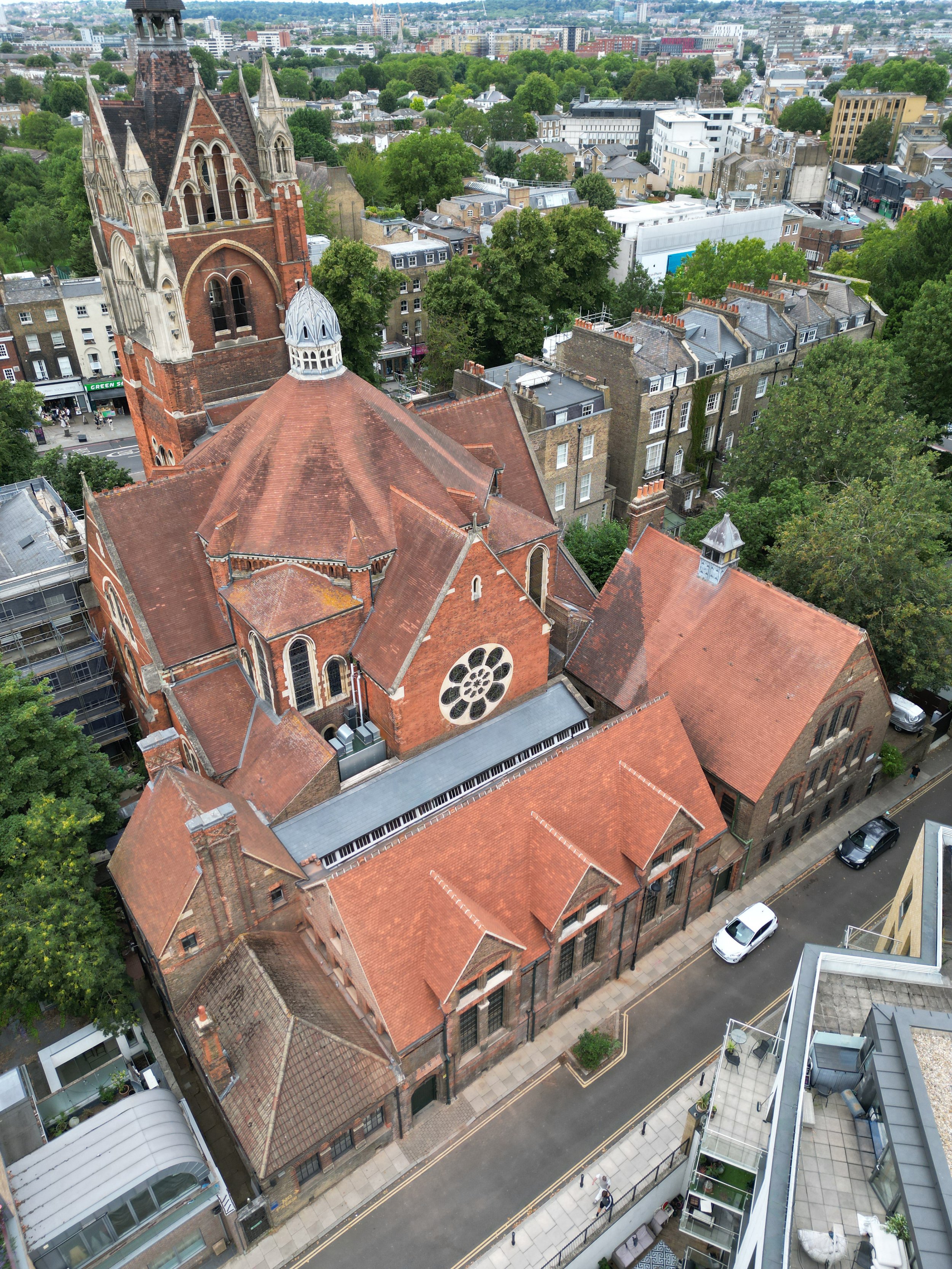
SUNDAY SCHOOL HALL, UNION CHAPEL, LONDON
Conserving a vulnerable heritage asset as a resilient and inclusive space for future generations
The Union Chapel is an architectural treasure that’s home to a working church, an award-winning venue, a unique organ and The Margins Project for those homeless and in crisis in London. The restoration of the Sunday School Hall is a landmark heritage project that has revitalised a rare and historically significant Victorian educational building. Designed by James Cubitt in the 1870s, the Grade II* listed structure is an exceptional example of the Akron-plan typology, combining a central hall with surrounding teaching galleries.
Delivered through the “Sunday School Stories” initiative, an ambitious programme to secure its future has carefully balanced conservation with contemporary needs and accessibility. Extensive repairs to the building envelope, including brickwork, roof, and drainage, have been paired with the sensitive restoration of original features such as timber joinery, plasterwork, and decorative finishes. The introduction of discreet modern services, including underfloor heating, ventilation, and upgraded electrical systems, ensures long-term usability.
Sustainability was integral to the scheme, with improved insulation, efficient building systems, and low-energy lighting significantly reducing operational carbon while respecting the historic fabric. Equally important is the project’s social dimension: a programme of public workshops and skills training has embedded community engagement within the construction process itself.
The hall is now a flexible cultural venue, supporting performances, exhibitions, and community activities. This project demonstrates how rigorous conservation, environmental responsibility, and social value can be combined to transform a vulnerable heritage asset into a resilient and inclusive space for future generations.
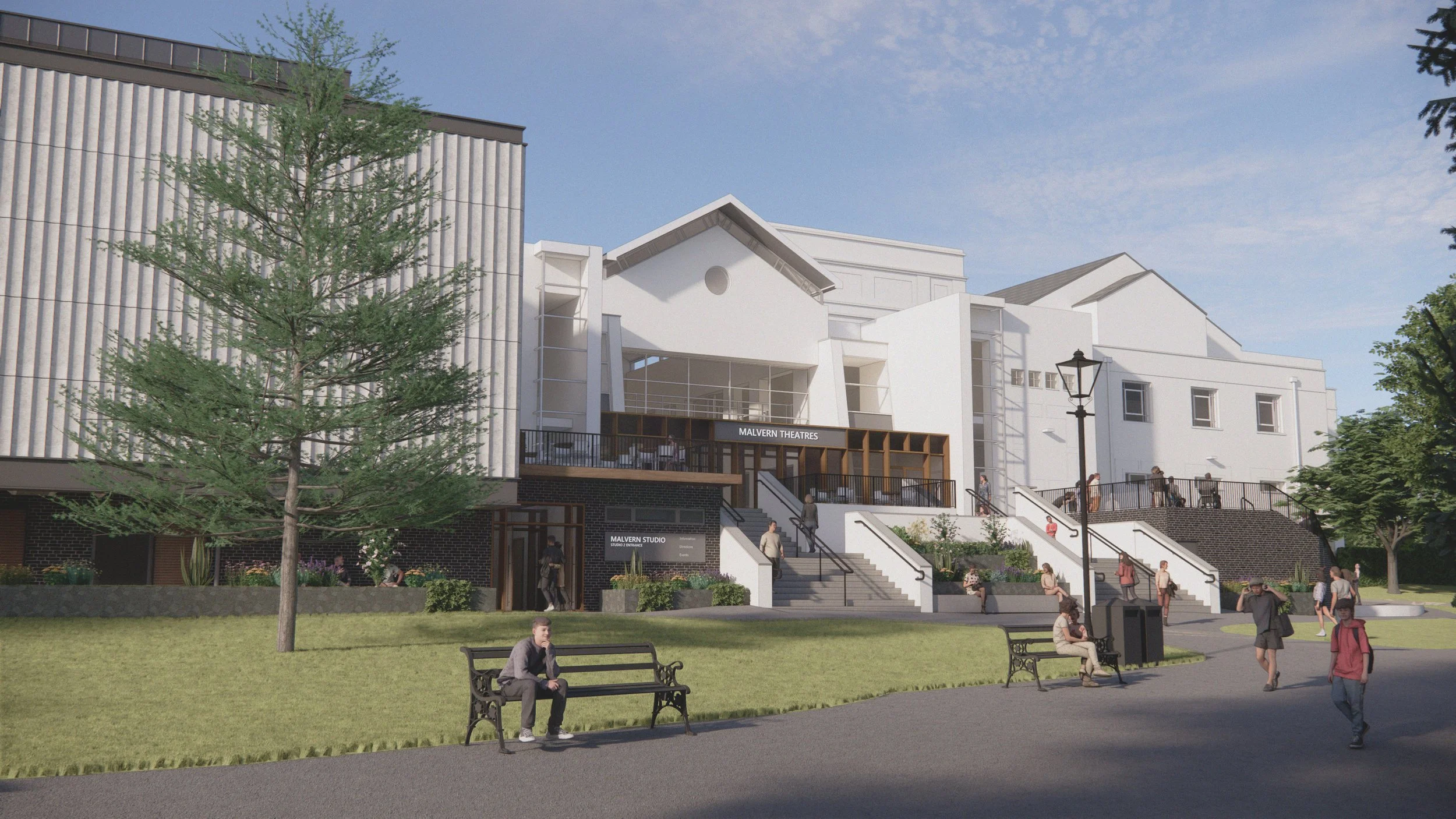
MALVERN THEATRES
New community studios, creating one of the largest multi-venue arts centres under a single roof in Europe
The remodelling and extension of Malvern Theatres, in collaboration with the Theatre and Malvern Hills District Council. The ambitious scheme, with funding from the UK Government’s Levelling Up Fund, will deliver a world-class cultural facility in Great Malvern.
The development will add a 240-seat studio theatre to the venue’s four existing auditoria. Beneath this studio, at park level will be two additional studios for classes and workshops. Upgrades to the existing Forum Theatre will create a level access stage and better seating, alongside improvements to the theatre’s technical capabilities and back of house areas.
A new entrance from Priory Park, complete with lift access, will complement upgrades to the existing rear access and will strengthen the connection between the theatre and its surroundings. An outdoor amphitheatre will provide a new platform for informal performances in the park, helping to open up arts and culture to even more people across the region.
The project has a number of core aims: to increase community use of the theatres, to provide opportunities for participation in the arts, to promote well-being and to enrich the programme with a greater range of shows on offer. In particular, the 240-seat will be ideal for work that demands a smaller-scale, more intimate performing environment than the existing 800-seat venues can provide. The completed building will have six seated venues in total, providing almost 2500 seats, and will be one of the largest multi-venue arts centres under a single roof in Europe.