

Burrell Foley Fischer named finalists for Creative Conservation Architect of the Year
We are thrilled to announce that Burrell Foley Fischer have been named finalists for Creative Conservation Architect of the Year at the 2026 BDOnline Architect of the Year Awards. The prestigious awards recognise architectural firms for a body of work in a particular sector.
For four decades, Burrell Foley Fischer has championed the creative conservation of historic buildings. As the environmental and social value of retrofit becomes increasingly evident, the projects we submitted for the awards demonstrate how a new generation of Principals is advancing this legacy through the imaginative and sustainable adaptation of Listed buildings for contemporary use.
The selected schemes illustrate the breadth and ambition of this approach. In Worcestershire, a historic carpet factory has been conserved and remodelled to transform a derelict gateway site into a thriving centre for enterprise, creativity and community activity. In London, the restoration of Islington’s Union Chapel Sunday School Hall has revitalised a rare and historically significant Victorian educational building for renewed community uses. In Great Yarmouth, two long-derelict landmarks are being brought back into meaningful public life: a 1930s Art Deco pub reimagined as a vibrant and sustainable community asset, and the UK’s last surviving Victorian ironwork glasshouse on a seaside promenade restored as a flexible venue for entertainment, education and community engagement.
Central to every project is a close and collaborative relationship with clients, ensuring that each scheme balances contemporary requirements with respect for historic fabric and local identity. Burrell Foley Fischer believes that successful creative conservation depends upon delivering environmentally, socially and economically sustainable solutions that secure viable long-term futures for heritage buildings within realistic funding and capital constraints.
BFF submitted the following four conservation projects as examples of our work, either recently completed or currently in progress.
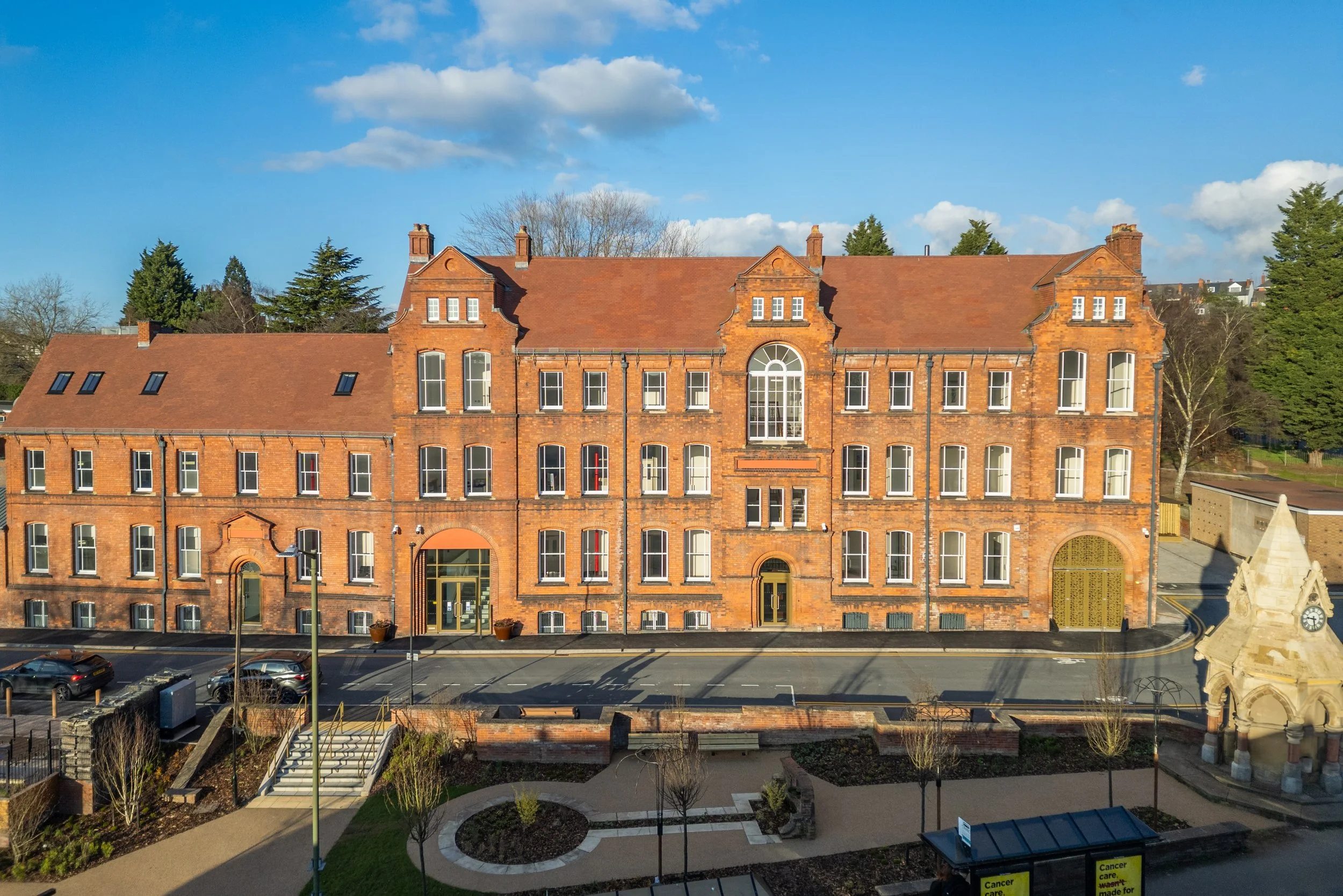
OLD COURT AND WEAVING SHEDS, KIDDERMINSTER
Bringing together architectural heritage and contemporary innovation to foster economic growth and community cohesion
The transformation of Kidderminster’s Grade II listed Former Magistrates’ Court has revitalised a prominent gateway site, re-establishing it as a dynamic centre for enterprise, creativity and community use. Delivered by Wyre Forest District Council with support from the Future High Streets Fund, the project restored a valued historic asset while adapting it to meet contemporary needs. Reimagined as “The Old Court and Weaving Sheds”, the scheme successfully integrates heritage conservation with flexible, future-focused design, reinforcing the identity and resilience of the town centre.
A comprehensive programme of works included conservation, strategic alterations, enhanced public realm and improved connections to surrounding urban routes, ensuring the site is reintegrated into the wider town. The approach prioritised the careful repair and retention of historic fabric alongside targeted interventions that enable new uses. The north-lit former weaving sheds, an important industrial typology that reflects the town’s historic association with the carpet industry, were carefully restored.
Adaptability is central to the design. Spaces are configured to support multiple uses and evolving occupier demands, underpinned by upgraded building services, energy-efficient systems and improved thermal performance. These measures reduce operational costs and environmental impact, supporting long-term sustainability. Landscape enhancements, including new planting, contributes to biodiversity and creates an inviting civic setting.
Previously vacant for over a decade, the building now accommodates a diverse mix of businesses, start-ups and community organisations. The Weaving Sheds provide a venue for workshops, performances and events. The project reconnects the town with its industrial heritage while fostering collaboration, innovation and inclusive growth.
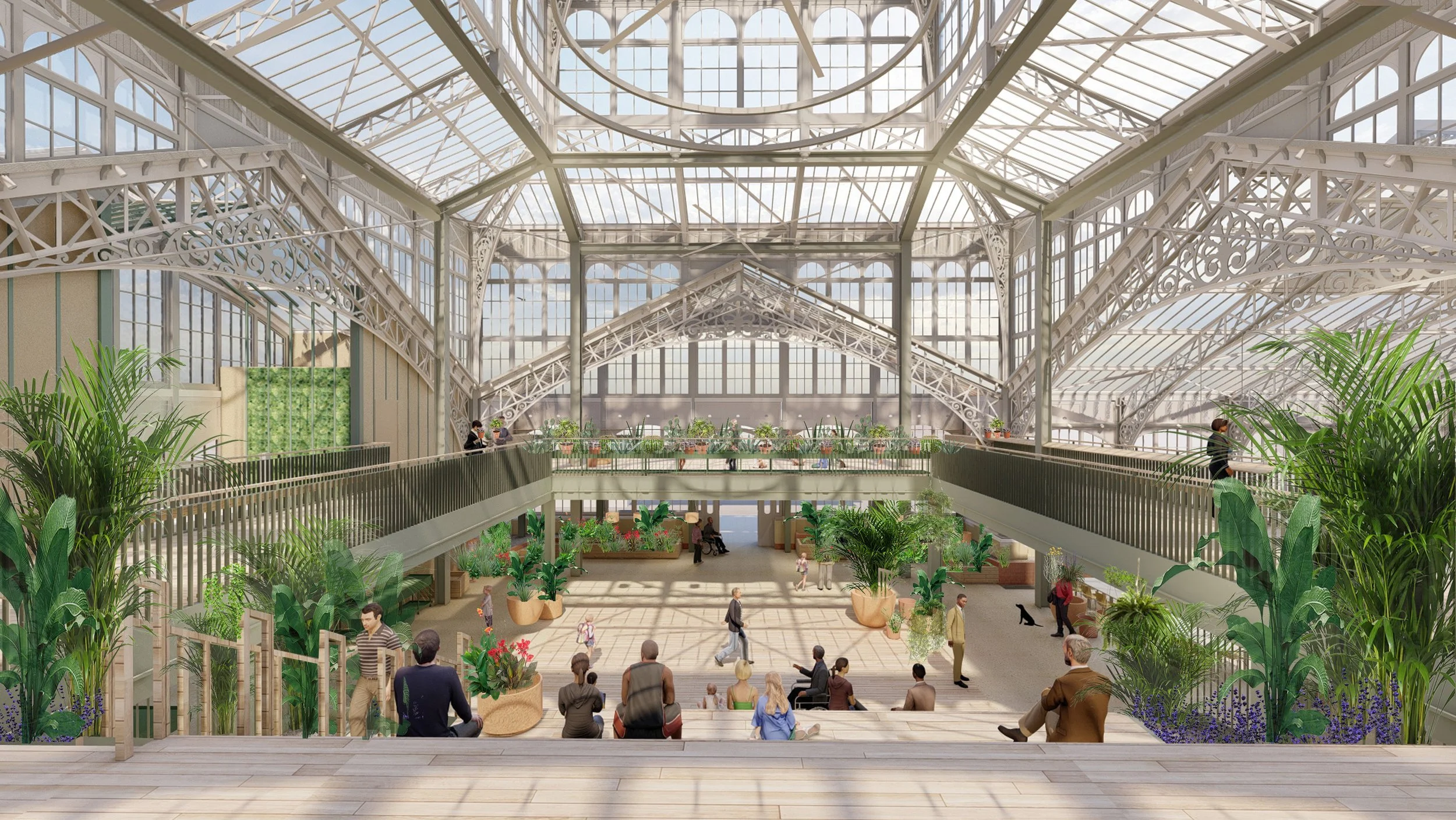
THE WINTER GARDENS, GREAT YARMOUTH
Transforming the only surviving Victorian seaside glasshouse into a flexible entertainment, education and community space
The last survivor of a British seaside tradition, the Grade II* Winter Gardens is currently unused, in a poor state of repair and on Historic England’s Heritage at Risk Register. Following restoration, this building of national significance will once again become a colourful and animated People’s Palace at the heart of the town’s life, economy, and heritage.
The new scheme aims to achieve sustainability targets adapted to the nature of the building, whilst respecting the historic fabric, and has implemented a ‘Net Zero Carbon in Operation’ strategy. Passive techniques have been developed to heat, cool and ventilate the space with the minimal use of energy and resources. Specialist conservation of the magnificent cast-iron structure will be complemented by a bespoke The planting proposal, with species referring to the Victorian planting and reflecting the town’s former trading routes, is sensitive to the need to balance a comfortable environment for people with a suitable environment for plants. New external landscaping and public seating will be provided.
The year-round attraction will include an event space with stage and seating; restaurant and bar; and a multi-purpose activity space. An integrated Interpretation Strategy will encourage engagement with heritage, biodiversity, sustainability, climate adaptation and future resilience.
The restoration has been made possible thanks to funding from The National Lottery Heritage Fund. It is one of five successful NLHF Heritage Horizon Awards projects, aimed at ambitious, innovative and transformational schemes that will revolutionise UK heritage low-carbon glazing system, achieving a carefully considered balance between sustainability and authenticity.
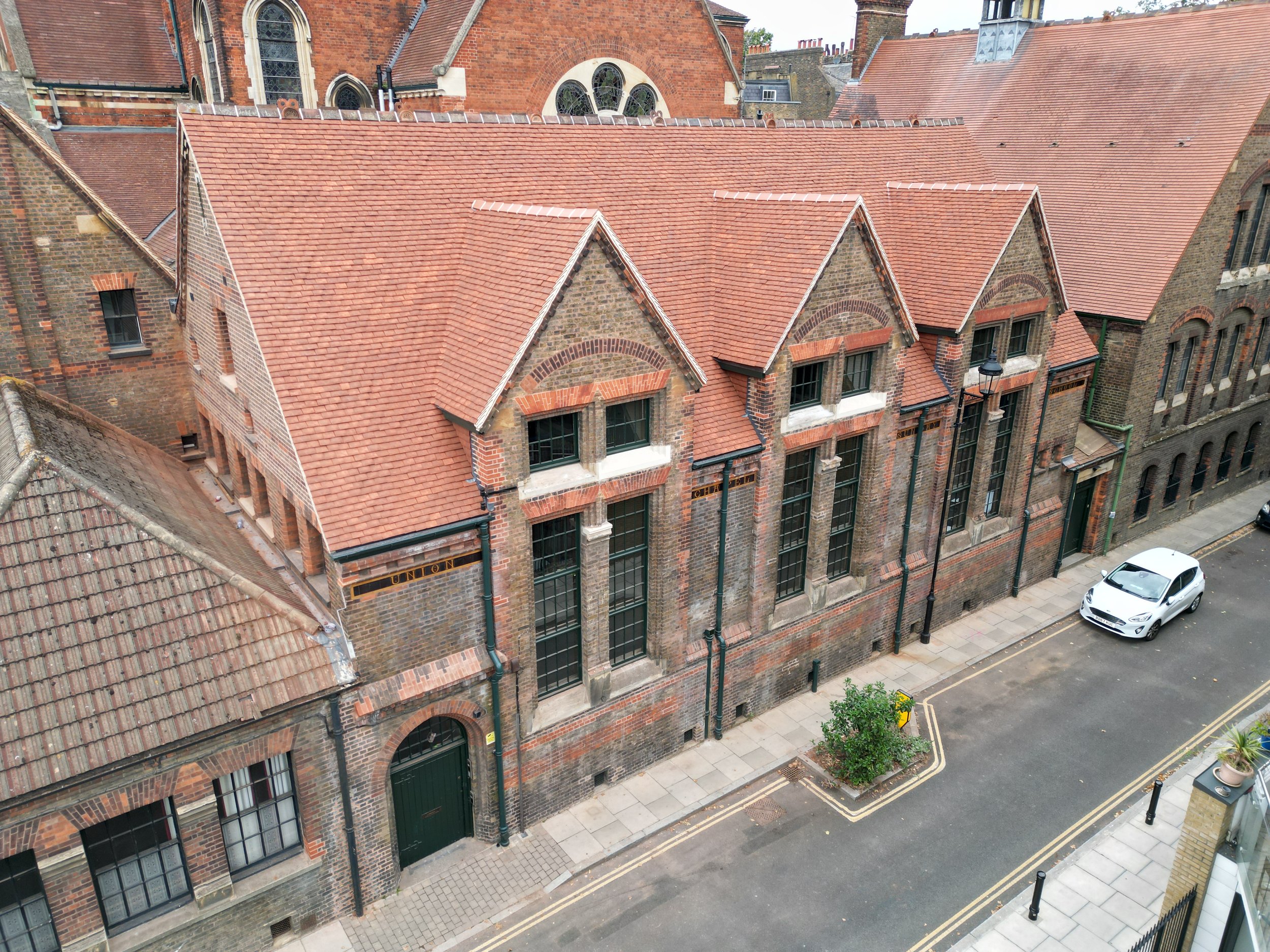
SUNDAY SCHOOL HALL, UNION CHAPEL, LONDON
Conserving a vulnerable heritage asset as a resilient and inclusive space for future generations
The Union Chapel is an architectural treasure that’s home to a working church, an award-winning venue, a unique organ and The Margins Project for those homeless and in crisis in London. The restoration of the Sunday School Hall is a landmark heritage project that has revitalised a rare and historically significant Victorian educational building. Designed by James Cubitt in the 1870s, the Grade II* listed structure is an exceptional example of the Akron-plan typology, combining a central hall with surrounding teaching galleries.
Delivered through the “Sunday School Stories” initiative, an ambitious programme to secure its future has carefully balanced conservation with contemporary needs and accessibility. Extensive repairs to the building envelope, including brickwork, roof, and drainage, have been paired with the sensitive restoration of original features such as timber joinery, plasterwork, and decorative finishes. The introduction of discreet modern services, including underfloor heating, ventilation, and upgraded electrical systems, ensures long-term usability.
Sustainability was integral to the scheme, with improved insulation, efficient building systems, and low-energy lighting significantly reducing operational carbon while respecting the historic fabric. Equally important is the project’s social dimension: a programme of public workshops and skills training has embedded community engagement within the construction process itself.
The hall is now a flexible cultural venue, supporting performances, exhibitions, and community activities. This project demonstrates how rigorous conservation, environmental responsibility, and social value can be combined to transform a vulnerable heritage asset into a resilient and inclusive space for future generations.
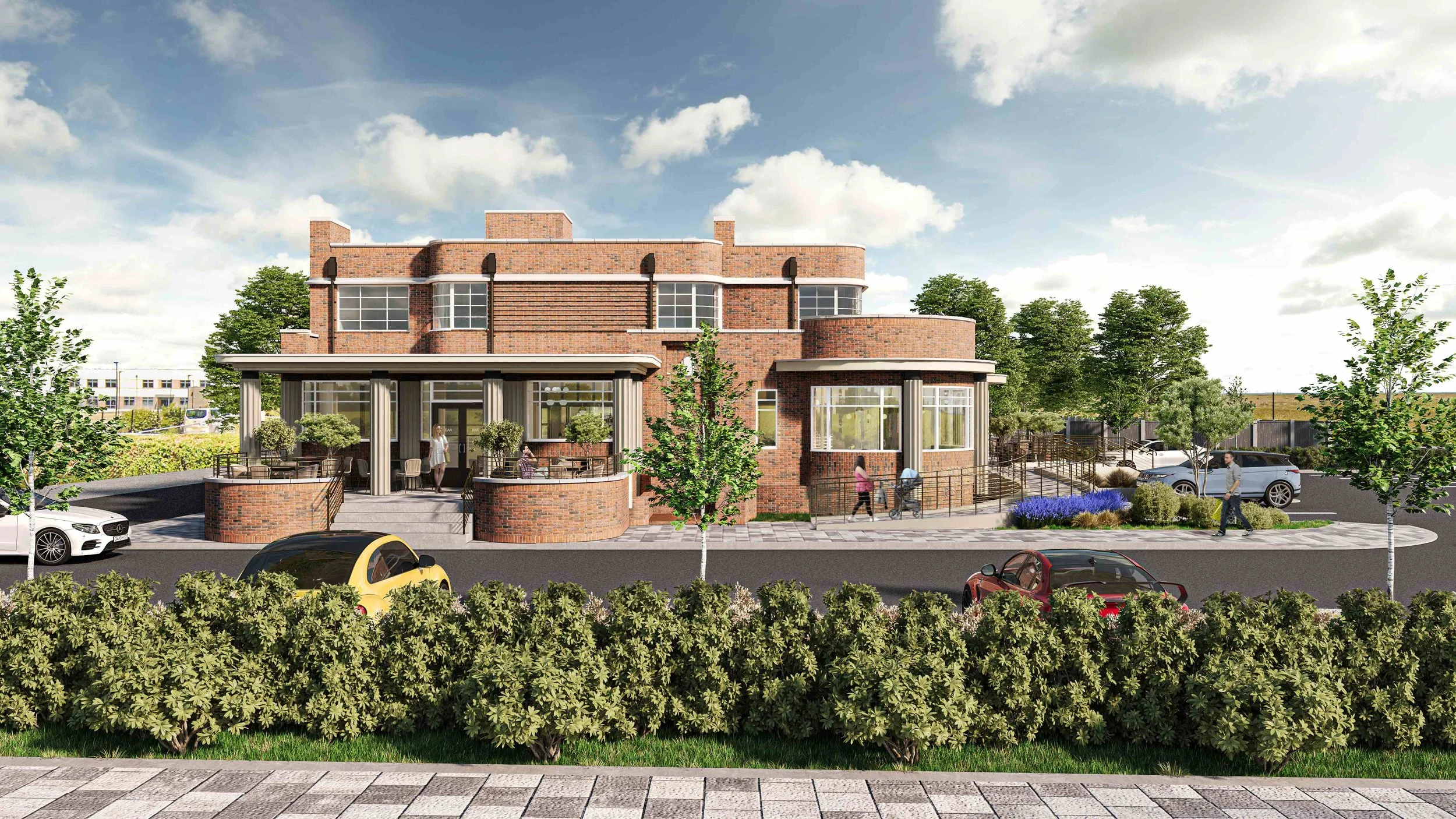
THE IRON DUKE, GREAT YARMOUTH
Bringing a long-derelict 1930s Art Deco pub back to life as a vibrant, sustainable community asset
The restoration of the Grade II listed Iron Duke Public House, led by Great Yarmouth Preservation Trust and supported by the National Lottery Heritage Fund, will transform a long-derelict landmark into a vibrant, sustainable community asset. Vacant since 2007, the project seeks to conserve and reinstate the building’s distinctive 1930s Art Deco character, restoring it as a confident expression of inter-war modernity.
The ground floor will re-establish the building’s original social function through two complementary venues. One of the historic bars will operate as a public house, serving locally brewed beers from the building’s original owners, Lacons Brewery, alongside period-inspired cocktails. The second bar will be reimagined as a restaurant, with an open kitchen.
Interior schemes have been rigorously informed by archival research and developed in collaboration with conservation specialists, ensuring an authentic and coherent Art Deco aesthetic throughout.
At first-floor level, former manager’s accommodation will be sensitively repurposed into two self-contained holiday apartments. Designed in keeping with the building’s heritage, these will provide high-quality accommodation for the seaside town and an additional income stream to support long-term viability.
The surrounding public realm will be carefully landscaped to improve accessibility and inclusivity, strengthening connections with the wider town. Through a combination of conservation-led design and viable new uses, the project secures the future of a significant historic asset, reactivating it as a year-round destination that contributes to the cultural and economic vitality of Great Yarmouth.