

Faye Davies to address the Festival of Place
Faye Davies, Managing Director of Burrell Foley Fischer, will be discussing the Restoration and Remodelling of York Guildhall at the Festival of Place being held at BoxPark Wembley, London. The complex, owned by City of York Council, comprises of Grade I, II* and II listed buildings built around a large 15th-century Guildhall. The refurbishment and remodelling has created a world class venue, combining civic, events and exhibition space with contemporary workspaces, in the heart of the historic city, and securing an economically viable and sustainable future for one of its most iconic buildings.
The Festival of Place is a one-day multi-track conference for 600 professionals working in the place-led regeneration, development, design, investment and stewardship of UK towns and cities. It provides the opportunity to learn from some of the most innovative minds in the ecosystem during an exciting day of talks, workshops and walking tours curated for a community of industry-leading property developers, local authorities, architects, housing associations, investors and designers committed to a sustainable and inclusive places.
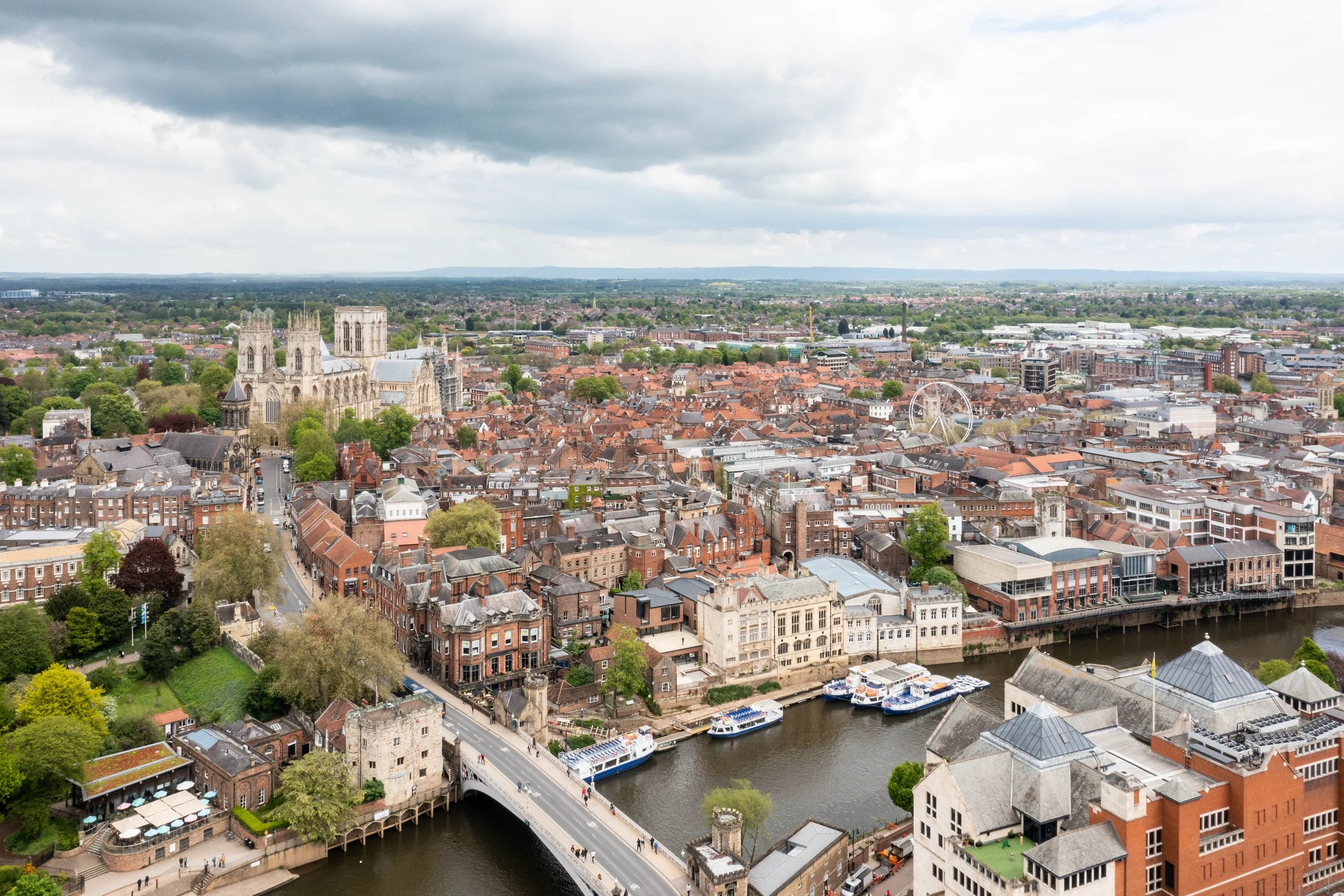
The Guildhall project has delivered a comprehensive refurbishment of one of York’s most prestigious and historically significant buildings, together with new build interventions as necessary to re-purpose the complex for its new use. Best practice conservation principles have been adopted, in terms of the approach to enhancing and better revealing the significance of the heritage assets, whilst incorporating modern servicing and amenity requirements.
A café and separate restaurant unit benefits from the new south facing riverside courtyard and garden space with an exemplary landscape treatment, which together with the refurbishment of Common Hall Yard, improves public access throughout the complex, creates more attractive circulation routes and improved links to the historic city centre.
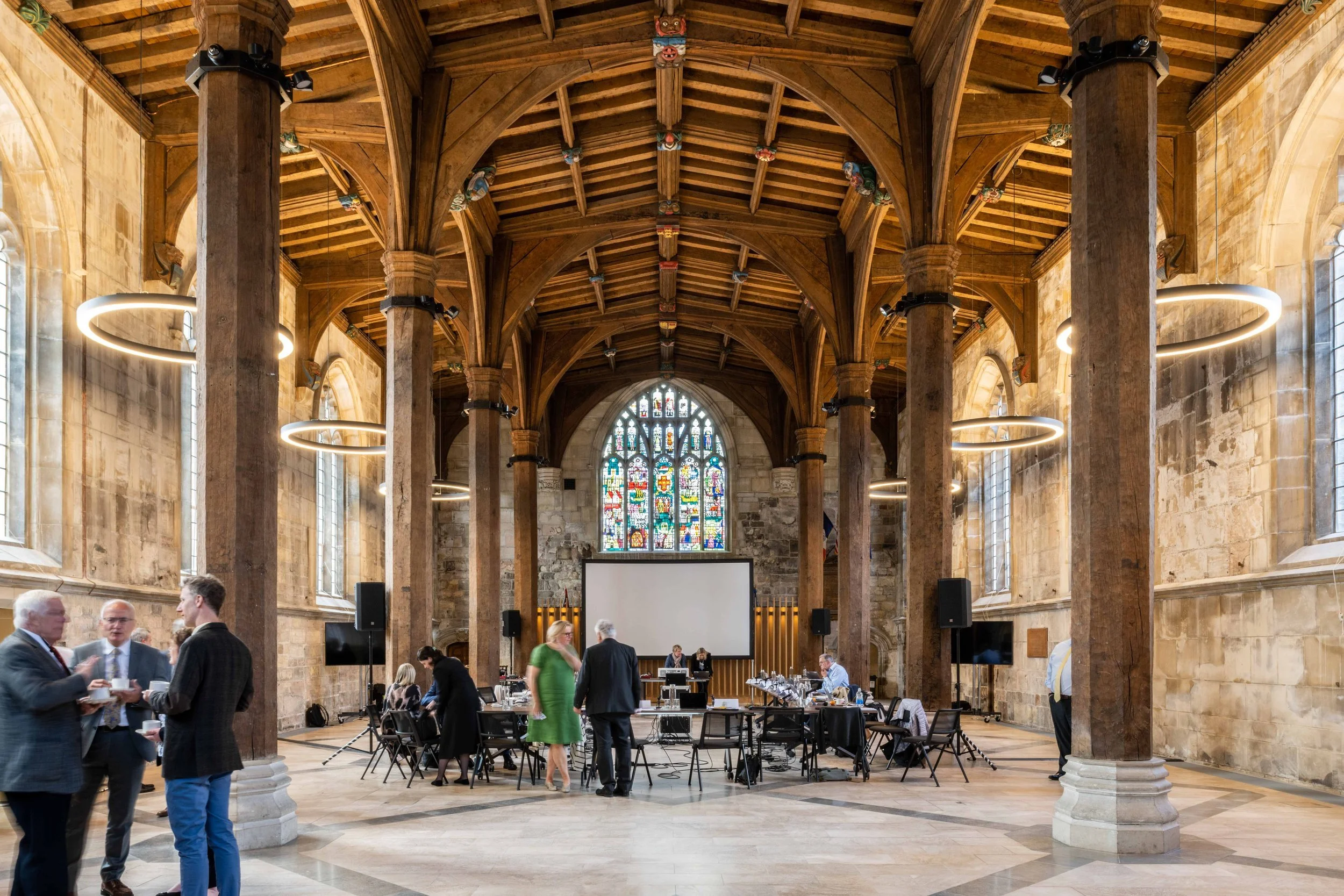
The project prioritised preserving the historic fabric, with minimal demolition ensuring significant embodied energy savings. Given the building's Listed status, including areas of the highest designation, certain compromises were necessary regarding sustainability measures. Nonetheless, notable improvements to the building’s carbon footprint were achieved. A low-carbon option makes use of the energy from the adjoining river Ouse, to both heat and cool the building.
Prior to the restoration project, poor condition and access had seen the Guildhall’s use decline. Today, the revitalised complex is a vibrant hub, accommodating tenants, employees, and hosting a wide array of events. The impact on the city is profound - preventing further deterioration of this historic asset while driving economic growth and generating high-value jobs. The Guildhall now stands as a beacon of heritage-led regeneration, combining sustainability with cultural and economic revitalisation.