

Burrell Foley Fischer has secured planning permission for a significant package of sustainability measures at St Martin in the Bull Ring, marking an important milestone in the decarbonisation of one of Birmingham’s most treasured historic buildings.
As part of the Church of England’s Demonstrator Churches Project, St Martin’s is taking a leading role in exploring how historic places of worship can respond to the climate emergency while safeguarding their architectural and cultural significance. The £5.2 million national initiative forms part of the Church’s Net Zero Carbon Programme and supports churches across the country in developing practical, replicable approaches to reducing energy use and carbon emissions.
Grade II* listed and with origins in the 13th century, St Martin in the Bull Ring has been at the heart of Birmingham’s civic, spiritual and community life for centuries. Today, alongside its role as an active parish church and welcoming thousands of visitors each year, it supports an extensive programme of community outreach, including the St Martin’s Centre for Health and Healing, which provides hundreds of hours of therapy and counselling every week.
Working closely with the church, the Diocese and statutory consultees, Burrell Foley Fischer undertook a detailed assessment of the building’s performance, carefully balancing environmental ambitions with the need to preserve the church’s historic fabric and character. The resulting proposals combine a range of complementary interventions designed to improve energy efficiency, reduce reliance on fossil fuels and support the long-term sustainability of the building.
Central to the scheme is the installation of photovoltaic panels on a number of roof slopes, alongside battery storage provision. Securing consent for renewable energy technology on a Grade II* listed church represents a particularly significant achievement, demonstrating how carefully considered design, rigorous heritage assessment and close collaboration with stakeholders can enable meaningful environmental improvements within highly sensitive historic settings.
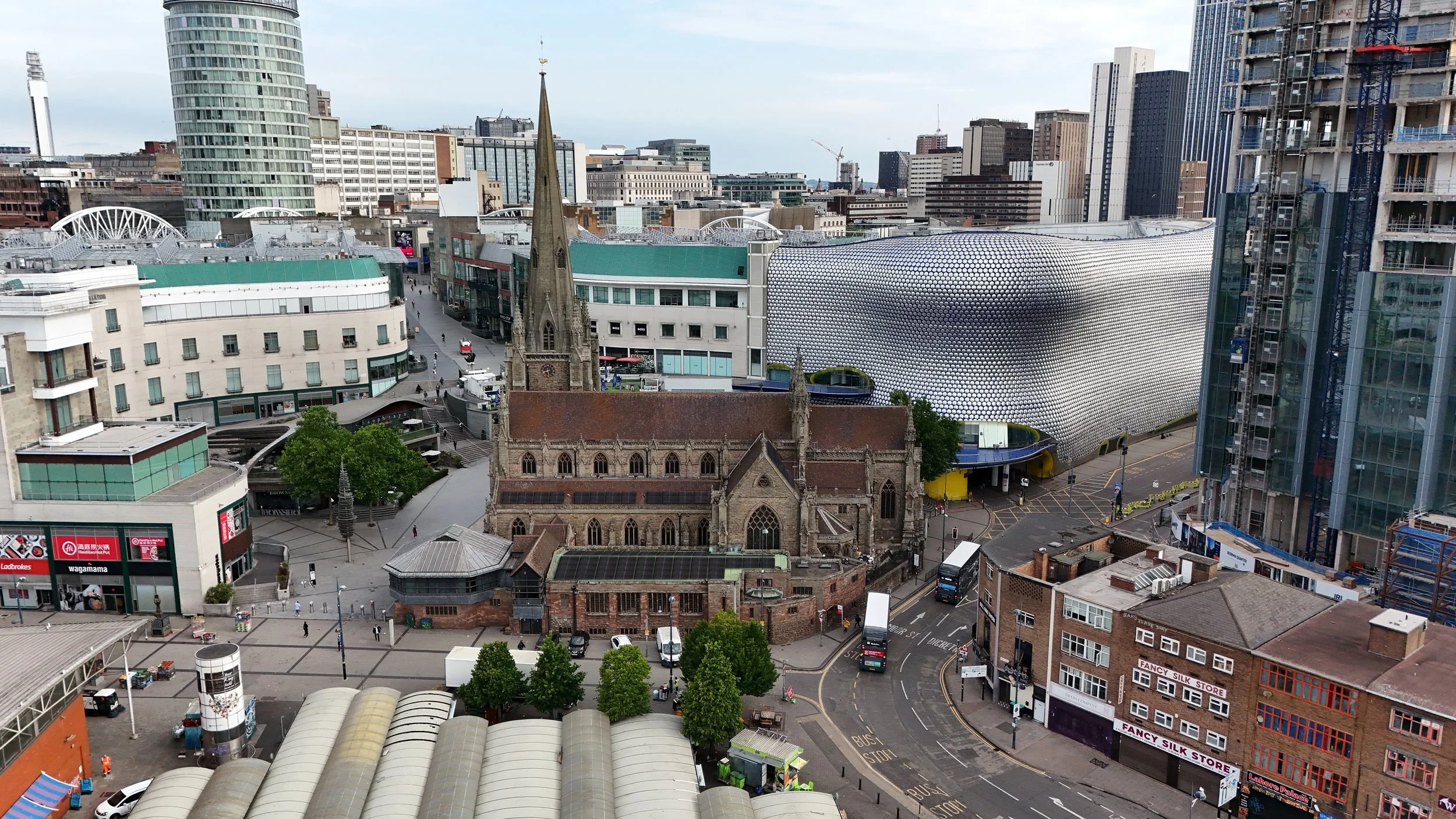
CGI showing photovoltaic panels added to the roof slopes
The wider package of works includes the replacement of the church’s existing gas boilers with electrically powered air source heat pumps, together with the installation of secondary glazing throughout the nave aisles, nave clerestories and tea lounge. A carefully selected glazing system has been specified to minimise fixings to the historic stonework, preserving clear views of the church’s intricate stone tracery while delivering a significant improvement in thermal performance.
The project reflects Burrell Foley Fischer’s long-standing expertise in delivering sustainable solutions for historic buildings, helping clients navigate the complex relationship between conservation and climate action. By combining a deep understanding of heritage significance with innovative environmental strategies, the practice is supporting owners and custodians in securing a viable, low-carbon future for some of the country’s most important buildings.
As one of the Church of England’s Demonstrator Churches, St Martin in the Bull Ring will provide valuable lessons for other places of worship and heritage organisations seeking to reduce carbon emissions while preserving the qualities that make these buildings special. The project demonstrates that, through thoughtful design and collaborative working, historic buildings can play a central role in the transition to a more sustainable future.
“We believe that caring for God’s creation and preserving our architectural heritage work together as part of our stewardship calling. Through thoughtful planning and community engagement, we aim to create a model for how historic churches can embrace environmental responsibility while honouring their past.” St Martin in the Bull Ring